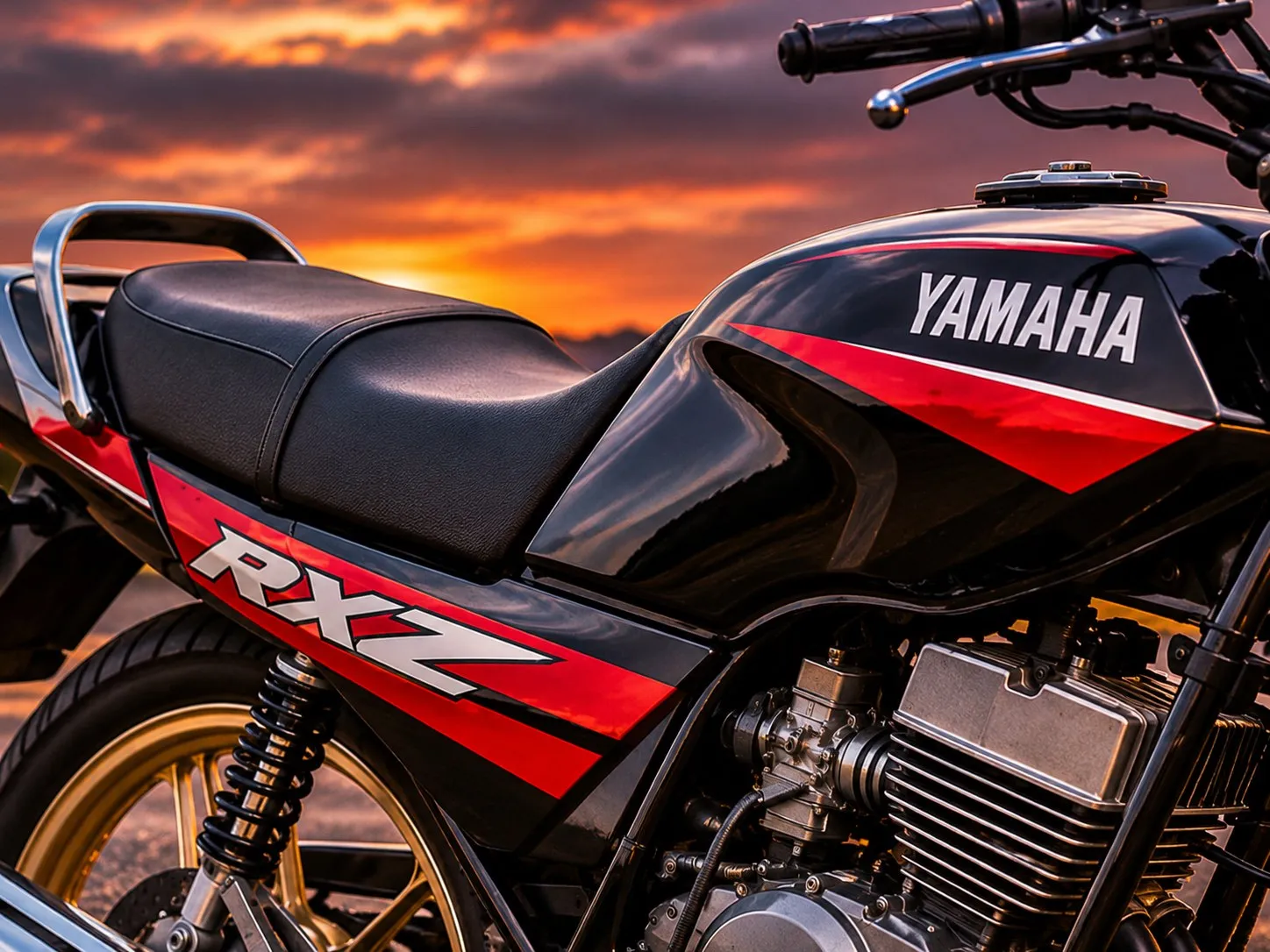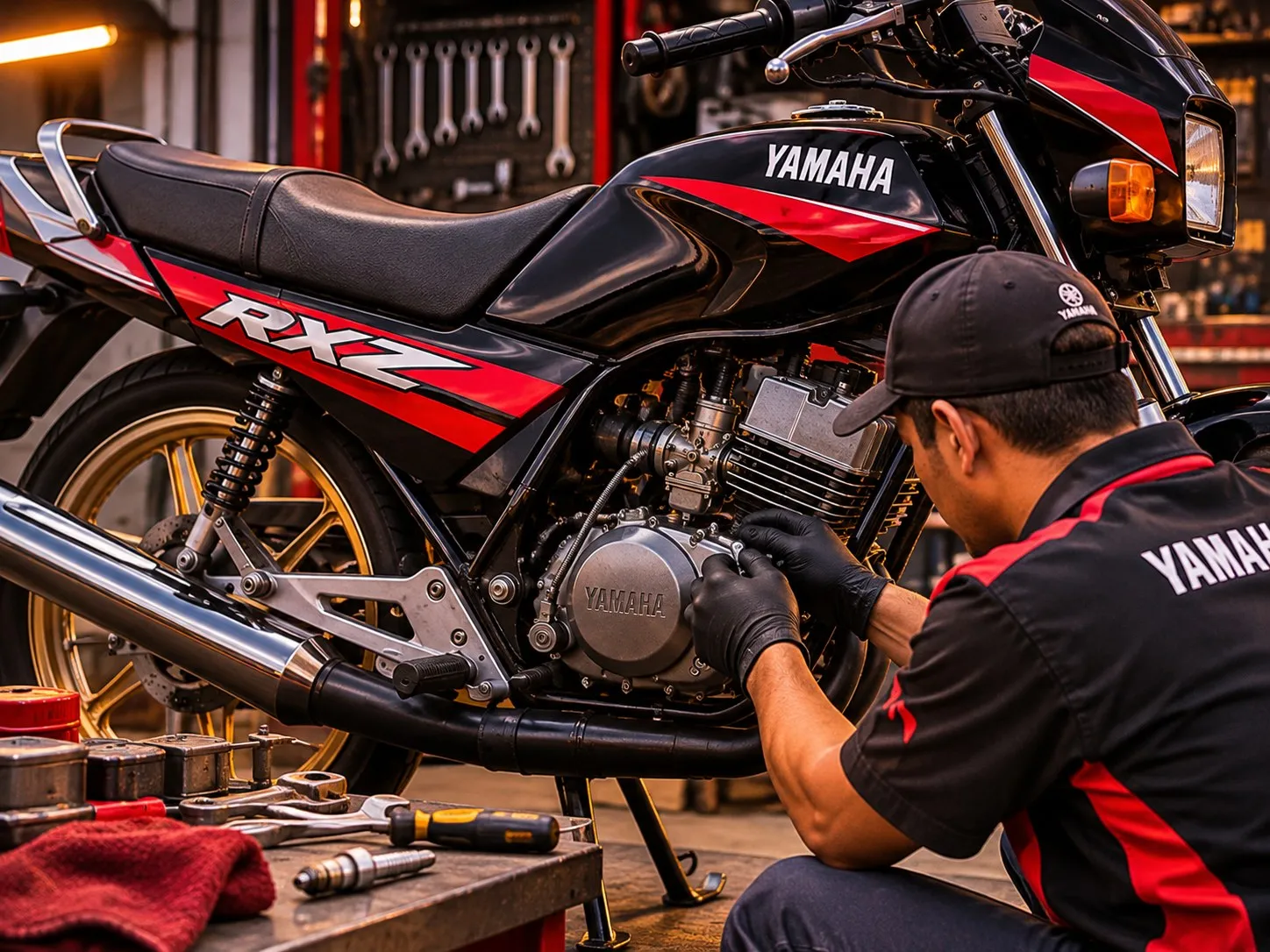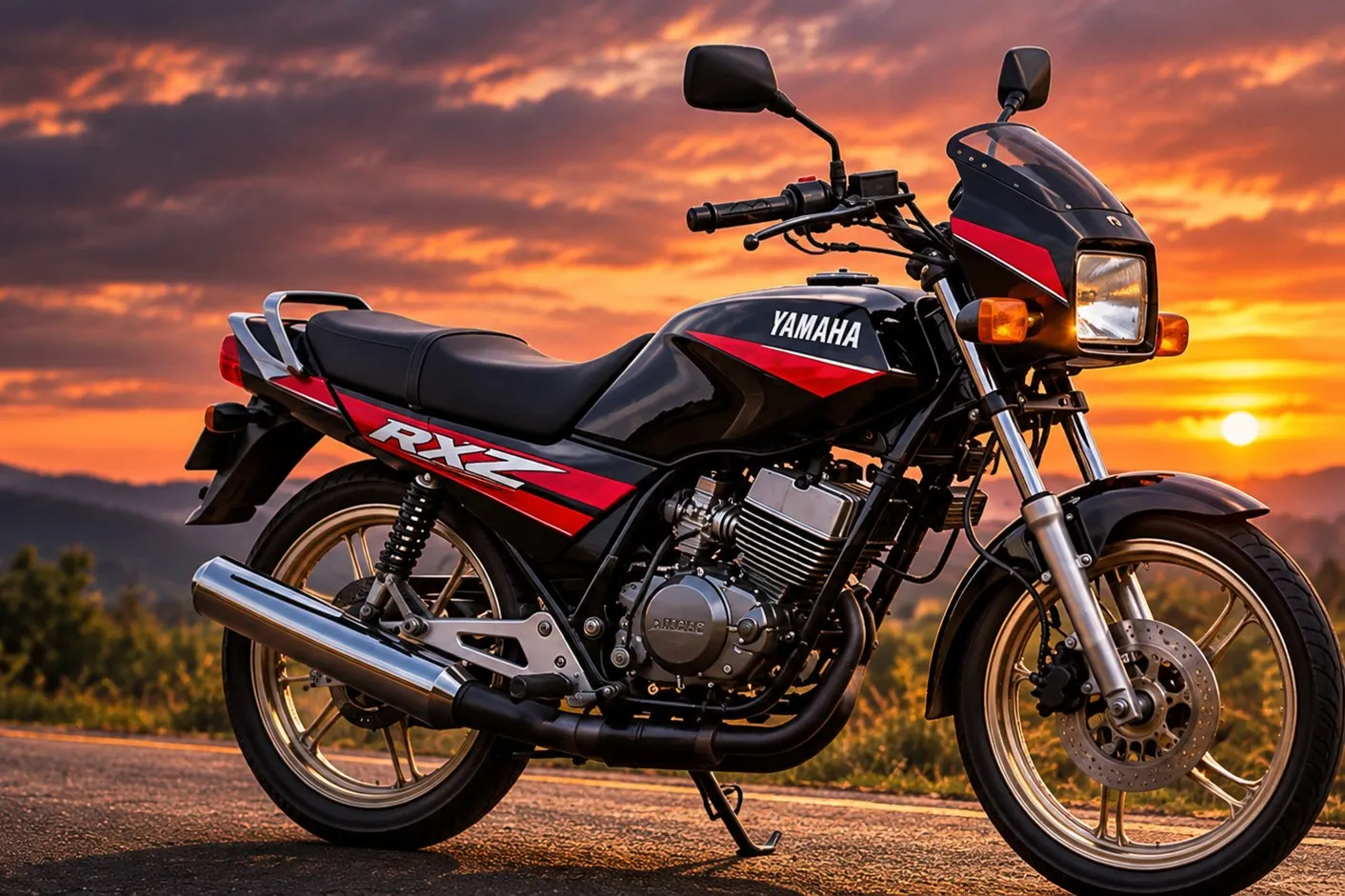
What is the RXZ Catalyzer?
"Catalyzer" is the name owners use for the final-generation RXZ, which Yamaha fitted with a catalytic converter inside the exhaust to reduce emissions. The catalyst helps burn off unburnt hydrocarbons that two-stroke engines are known for, letting the model stay on sale as emissions expectations tightened in the 2000s.
The Catalyzer kept the core RXZ recipe — air-cooled two-stroke single of about 133 cc, six-speed gearbox and Yamaha’s YCLS oil-injection system — so it rides and sounds like an RXZ.
Catalyzer vs earlier RXZ models
| Area | Earlier RXZ | RXZ Catalyzer |
|---|---|---|
| Exhaust | Standard exhaust (resonance chamber from 1990), no catalyst | Catalytic converter inside the exhaust |
| Era | 1985 – early 2000s | From around 2004 until production ended in 2011 |
| Styling | Earlier cowl, tank and graphics designs | Updated styling and "Catalyzer" graphics |
| Gearbox | 5-speed (earliest) or 6-speed | 6-speed |
| Availability | Older, often restored or modified | Newest examples available, popular with buyers seeking a later bike |
Details varied between production batches. Use this table as a guide, not a substitute for inspecting the bike and its documents.
How to identify a genuine Catalyzer
- Check that the frame (chassis) and engine numbers match the registration documents exactly.
- Look for the factory catalytic converter exhaust rather than an aftermarket expansion chamber.
- Compare the bodywork, tank and graphics with known original Catalyzer examples — repaints and replica decals are common.
- Confirm the registration year on the documents matches the Catalyzer period.
- Ask for service history and receipts for any major parts that have been replaced.
Buying tips
Because the Catalyzer is the newest RXZ available, clean examples usually command a premium. Take your time, inspect in daylight and bring a knowledgeable friend or mechanic if you can.
- Start the engine from cold and listen for knocking, rattles or uneven idle.
- Check for heavy smoke, which can indicate oil-pump or crank-seal problems.
- Inspect the frame, swingarm and exhaust for rust, cracks and crash repairs.
- Be cautious of bikes with removed or hollowed-out catalysts — tampering with emissions equipment may breach road-transport rules.
- Never pay a deposit before seeing the bike and verifying ownership.
Sources & further reading
Last reviewed: